A Civic Campus for Evanston
Keep 2100 Ridge Civic
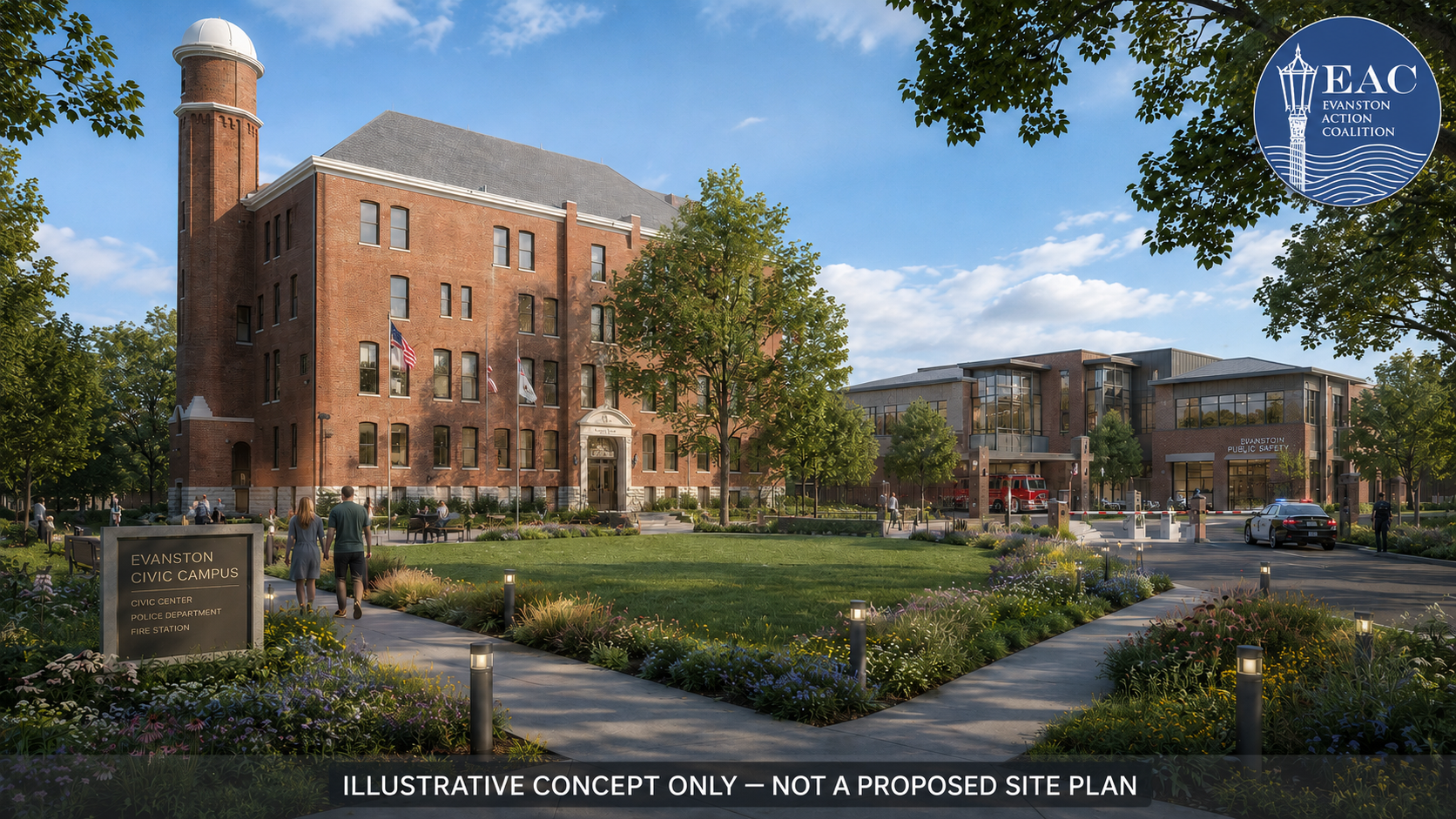
Marywood Academy is a major, publicly-owned National Register historic asset beside Ingraham Park. Rather than treating it as a redevelopment parcel, Evanston should evaluate restoring it as the public-facing heart of a renewed Civic Campus.
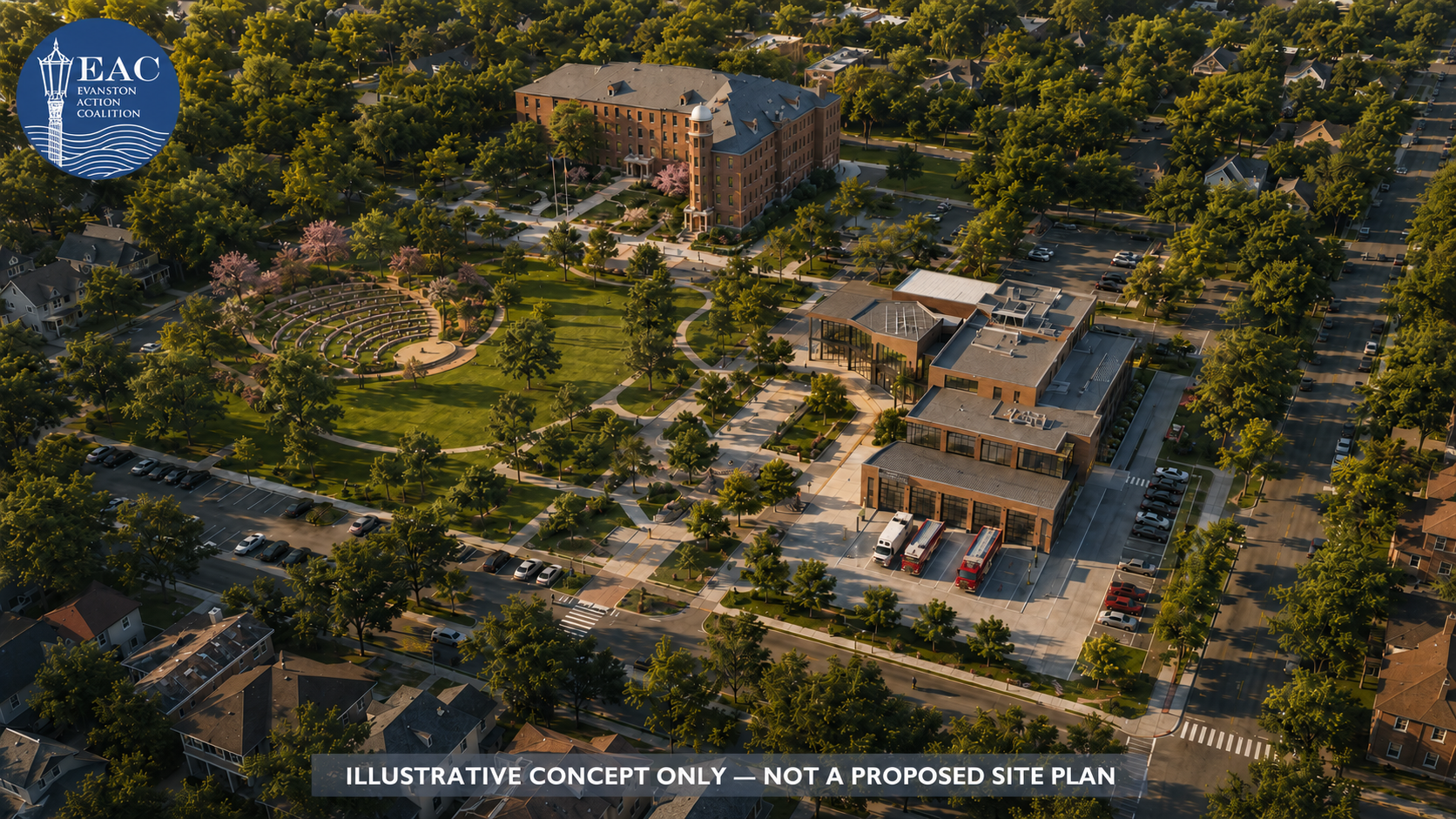
Build What Evanston Needs
A modern Police/Fire facility, accessible civic services, community meeting space, mission-aligned partner offices, and protected green space can work together on one campus—without consuming Ingraham Park.
A historic public asset deserves a serious public option.
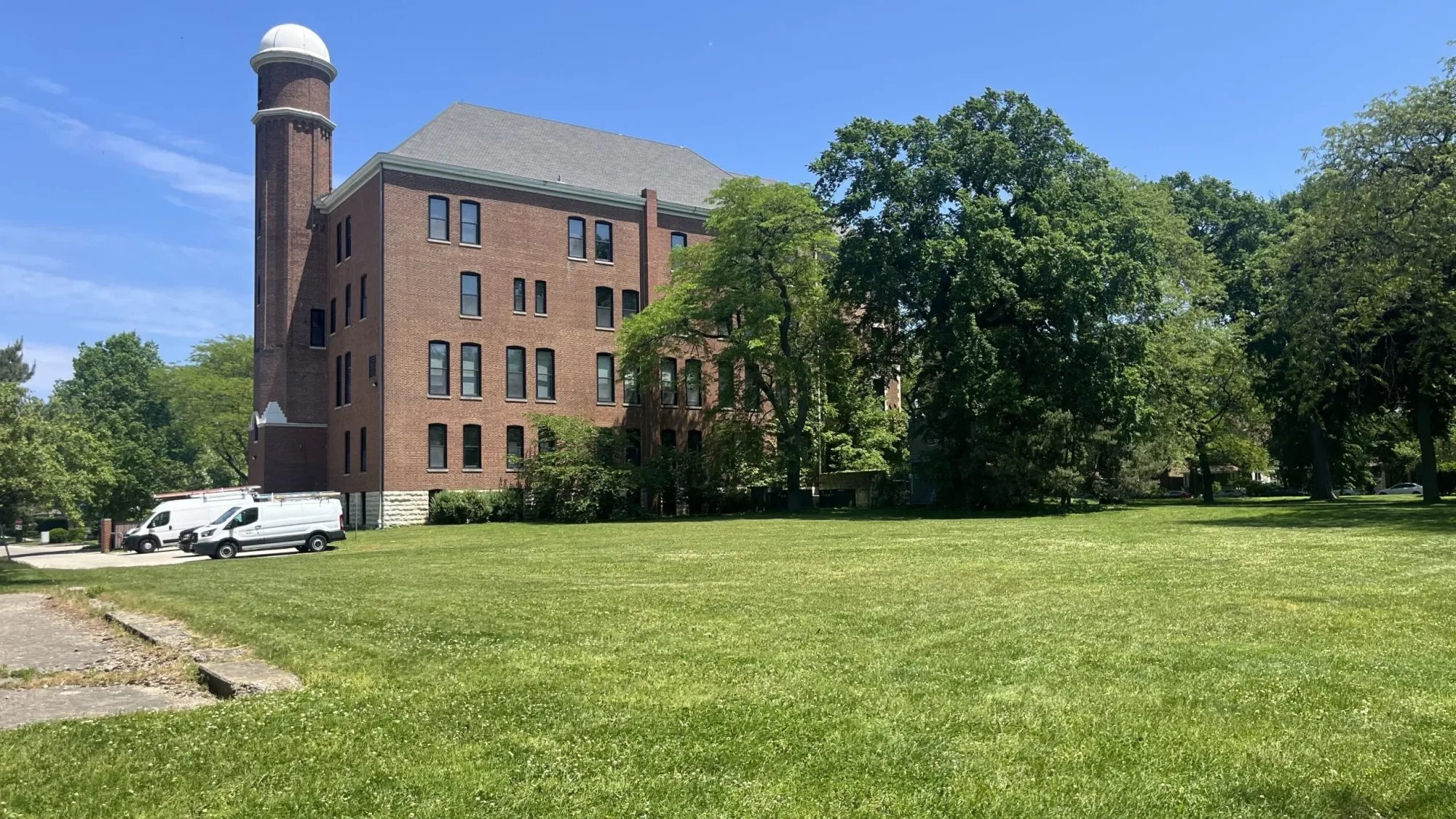
The former Civic Center—Marywood Academy—is one of Evanston’s most distinctive publicly owned buildings. Constructed in 1901, expanded in 1924, and occupied by City government since 1981, it is listed on the National Register of Historic Places.
The approximately seven-acre site includes a roughly 115,000-square-foot historic building, direct adjacency to Ingraham Park, access to transit, and a central location within Evanston. It should be evaluated as a long-term civic anchor—not simply as a redevelopment parcel.
The Opportunity
What Evanston Action Coalition is proposing
Restore and modernize the Civic Center
Comprehensively rehabilitate the historic Marywood Academy building for public-facing City services, administrative offices, Council and board meetings, community gathering space, and flexible offices for nonprofit and civic partners.
Build modern Police and Fire facilities
Develop a separate, purpose-built Police/Fire facility on the larger campus. Public-safety operations need secure, modern space for emergency operations, evidence, victim services, training, lockers, dispatch-support functions, and controlled access. Those functions should not be forced into the historic building.
Create a civic green for everyday use
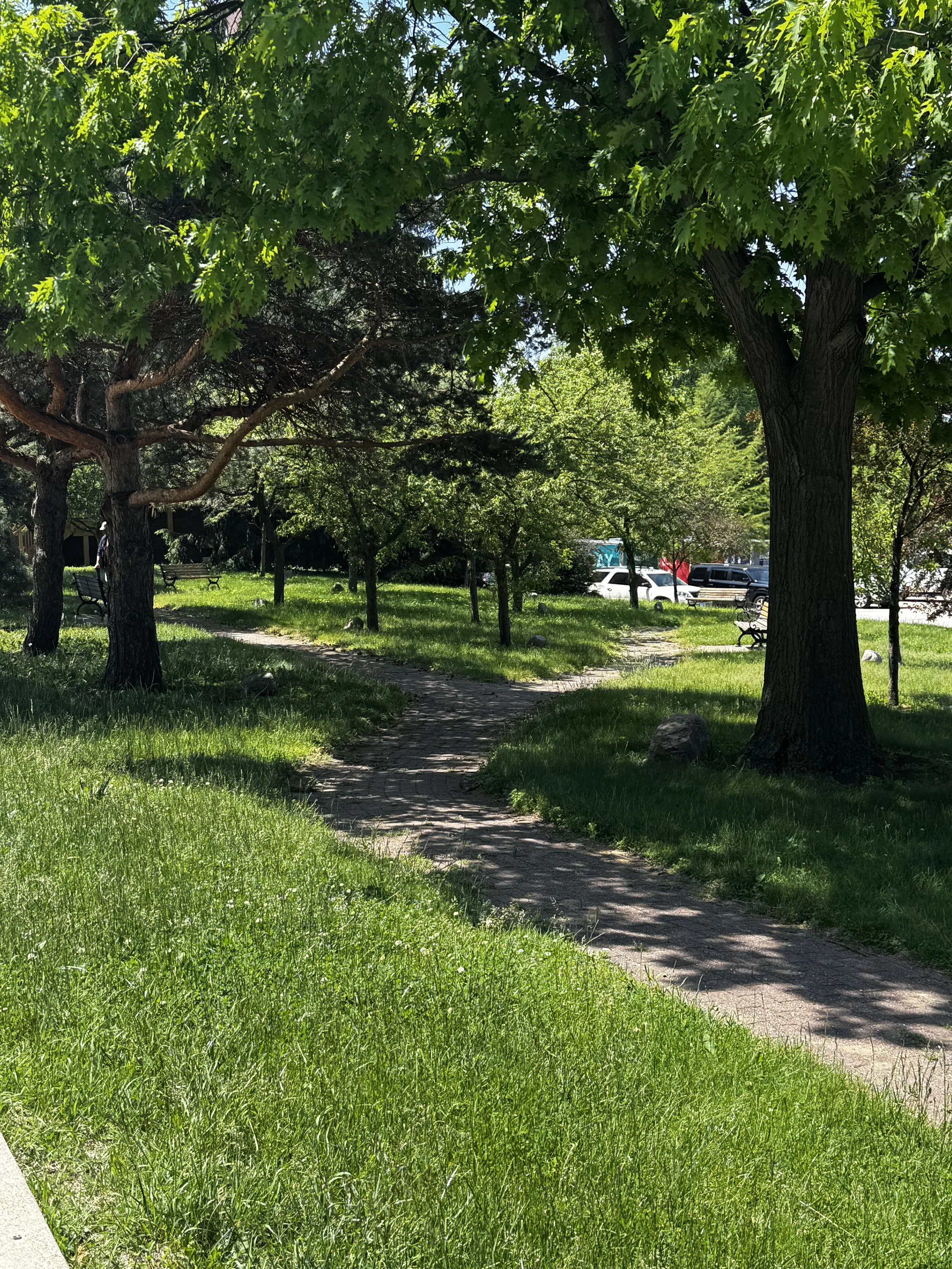
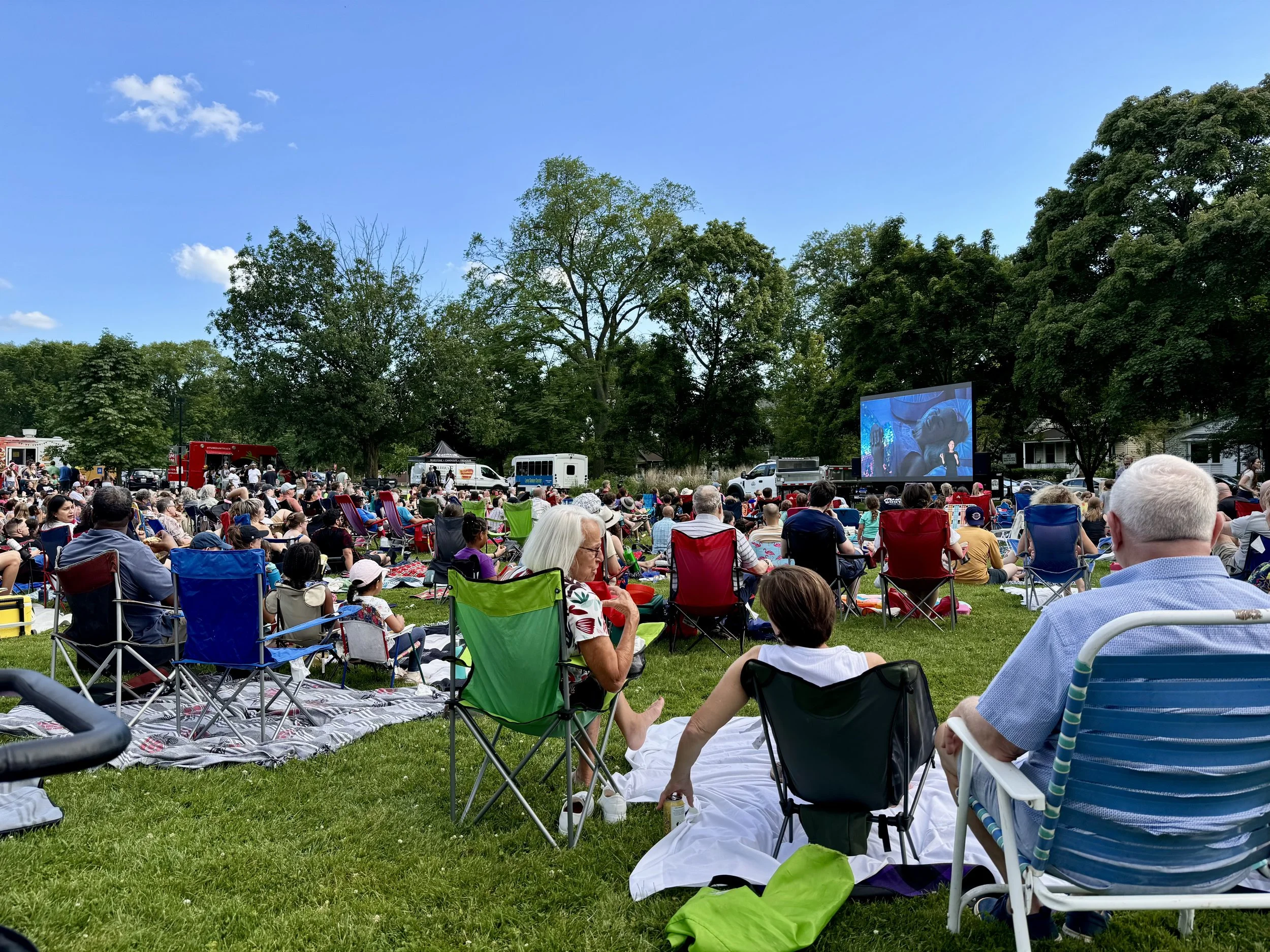
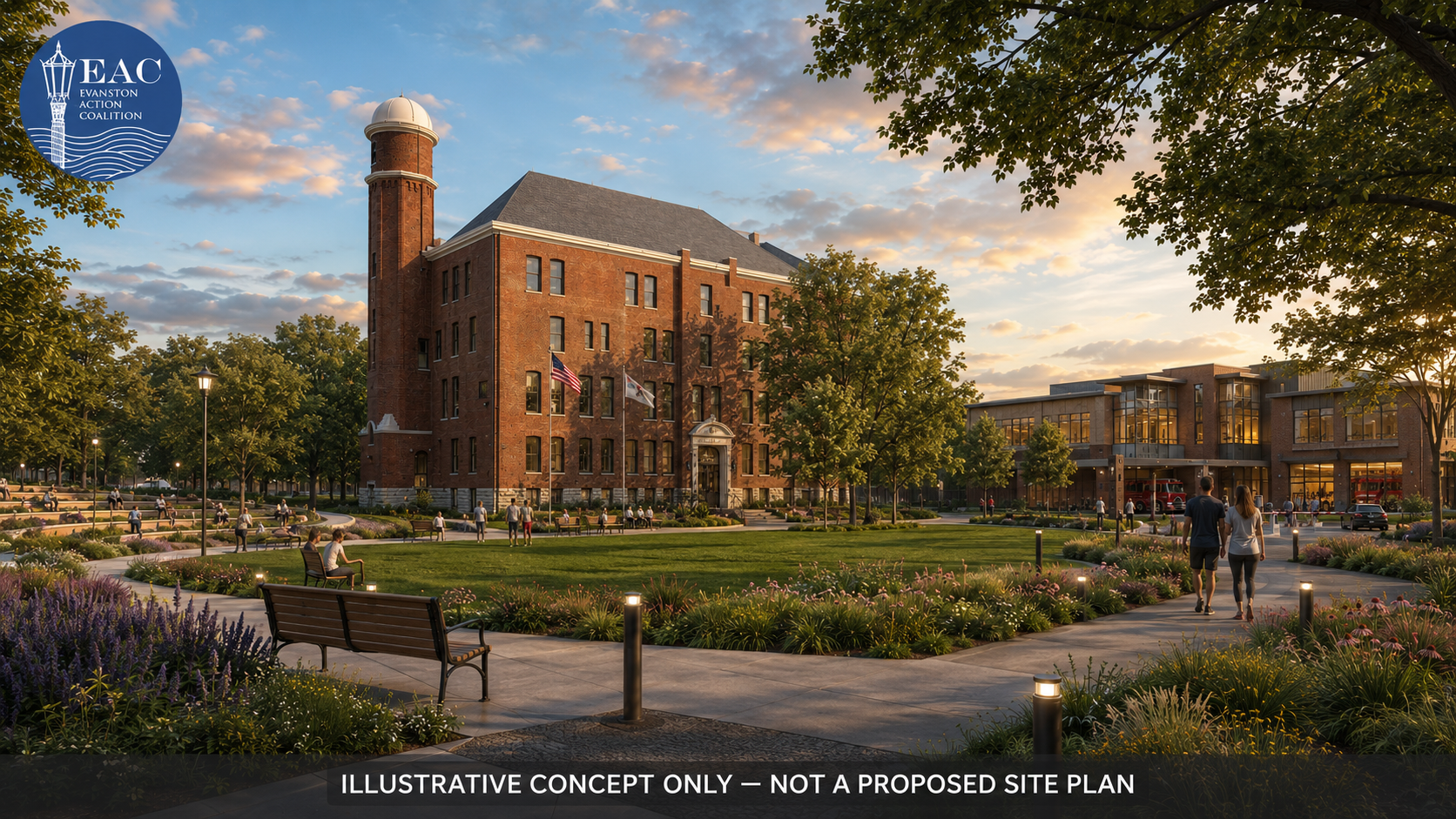
Improve the grounds with accessible paths, gardens, seating, bicycle access, shade trees, a civic plaza, and an open-air amphitheater for Starlight-style performances and community events—while preserving Ingraham Park as a real public green space.
A Campus, Not a Parking Lot
Protect Ingraham Park. Respect the neighborhood.
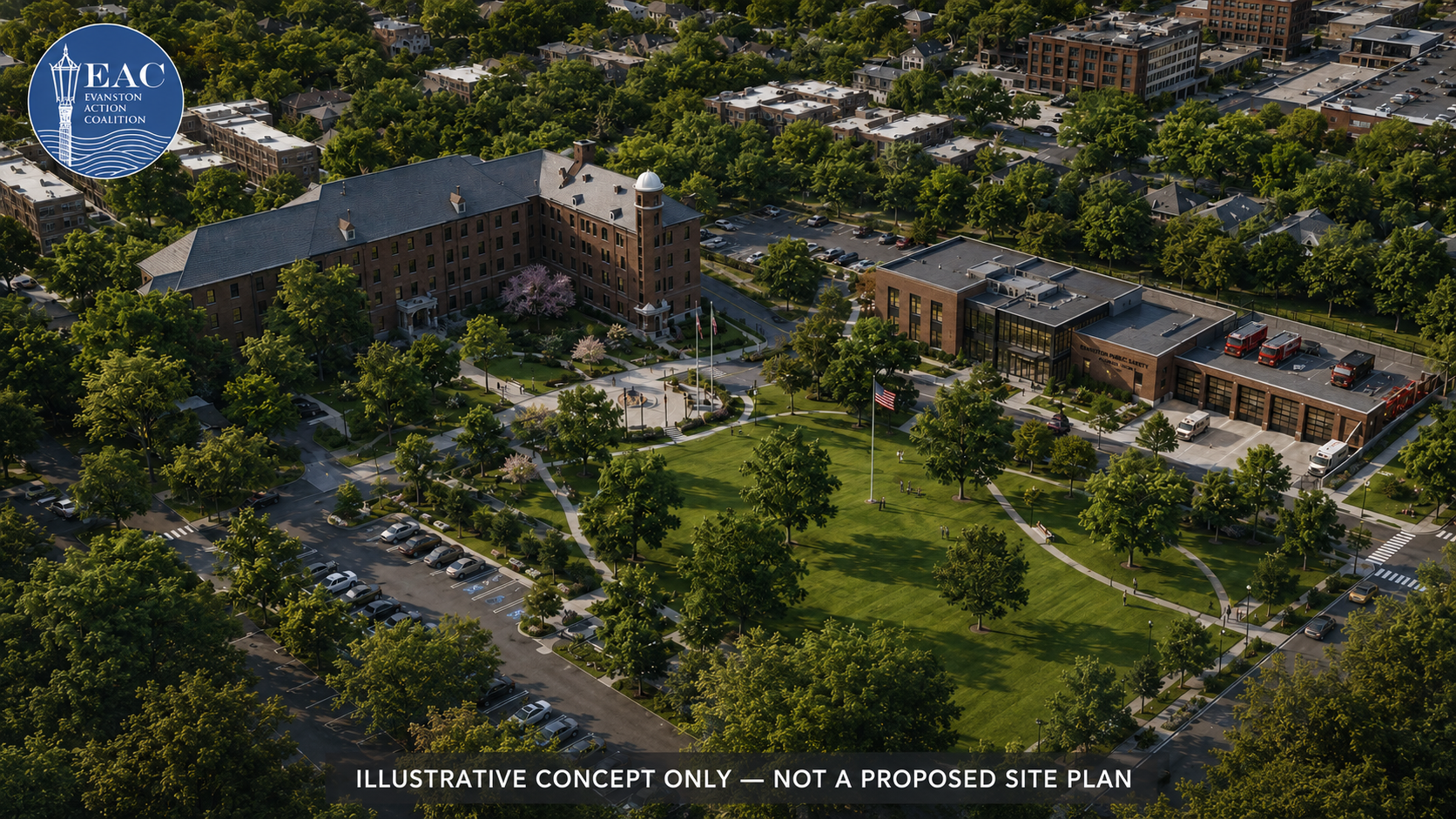
A Civic Campus should not consume Ingraham Park or turn the property into a sea of pavement. New public-safety facilities and parking should be located primarily within the already developed portions of the site, with careful attention to Ridge Avenue, Leonard Place, Simpson Street, pedestrian safety, emergency access, and nearby homes.
The concept is not a fixed site plan. It is a call for the City to study a serious alternative that keeps civic functions, public safety, historic preservation, and open green space together.
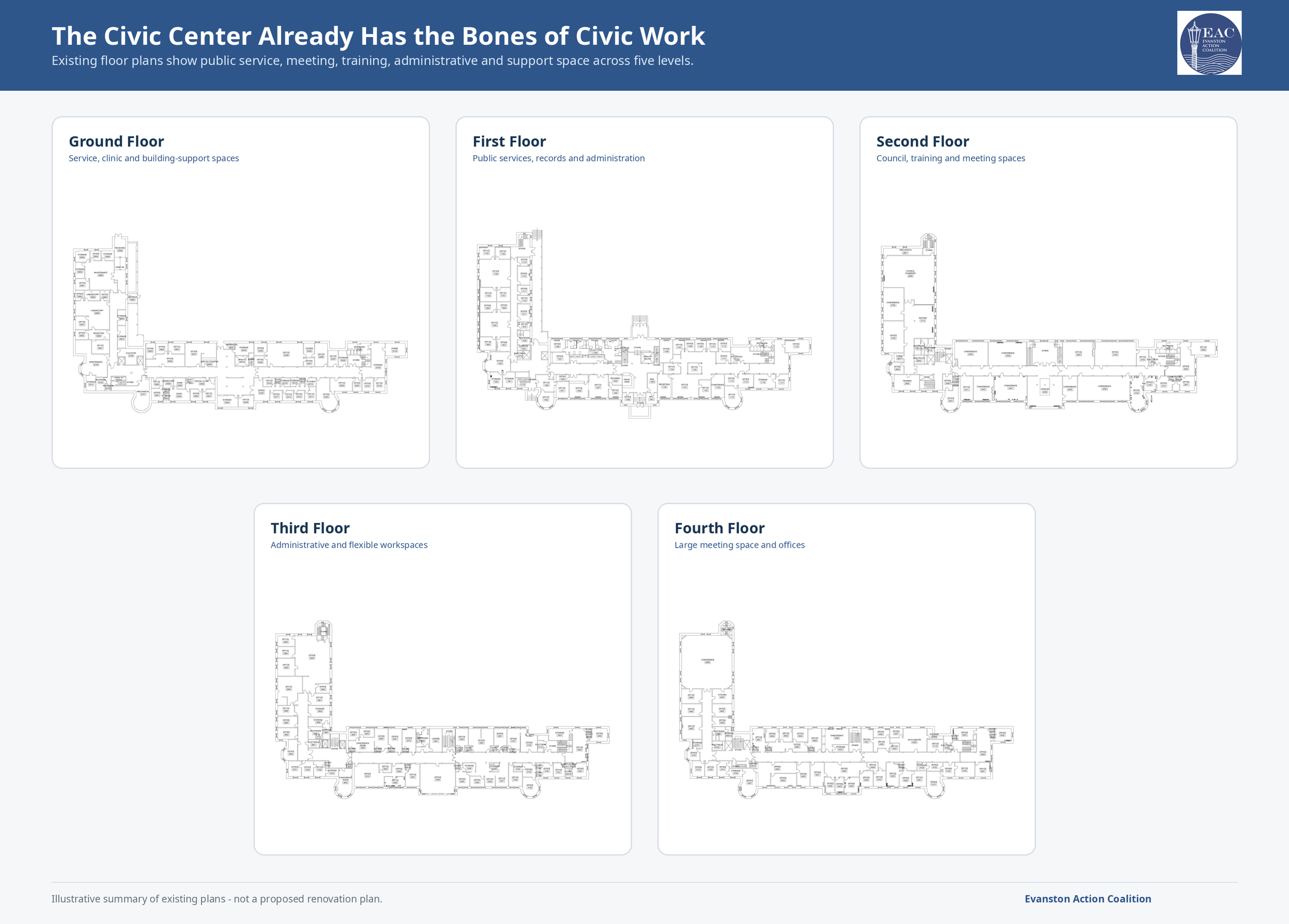
Inside the Existing Civic Center
Home to the City of Evanston government for more than 46 years
Before Evanston decides the future of 2100 Ridge, it should recognize the range of civic functions the building has already accommodated. Existing floor plans show public-facing service areas, records and administrative functions, Council Chambers, training and conference rooms, offices, and building-support space across five levels.
A serious rehabilitation would require major modernization of building systems, accessibility, circulation, and security. But the existing plans demonstrate that the Civic Center is not simply an empty shell: it has long supported a varied civic program and remains capable of informing a renewed public-use future.
Click floor plan thumbnails to view full layout.
A Responsible Financing Question
A major investment deserves a full comparison.
This would not be a low-cost proposal. City planning materials have placed comprehensive Civic Center modernization in roughly the $63 million to $71 million range. A City scenario combining Civic Center renovation, a new Police/Fire addition, structured parking, design costs, furnishings, contingencies, and limited historic restoration totaled approximately $143 million.
Depending on the final public-safety program, parking approach, site work, and potential historic-preservation incentives for qualifying mixed-use space, a complete Civic Campus should be evaluated as a roughly $120 million to $150 million long-term capital project.
That number should be compared honestly with the cost of permanent office leasing, dispersed government functions, replacement public-safety facilities elsewhere, repeated renovations at multiple sites, transportation and parking demands, and the loss of an irreplaceable publicly owned historic asset.
Potential Historic Preservation Incentives
Use every appropriate financing tool—without compromising the public purpose.
The City should evaluate whether a carefully structured, community-serving mixed-use program could make historic-preservation incentives available for qualifying income-producing portions of Marywood Academy.
Leased space for nonprofit organizations, community-serving offices, cultural or educational partners, and other mission-aligned tenants could potentially support applications for federal and state historic rehabilitation tax credits, subject to applicable requirements and the final project structure.
These incentives should be treated as a possible financing tool—not an assumed subsidy—and should not displace the campus’s central public purpose.
What EAC Is Asking For
Before any permanent disposition of 2100 Ridge as a public asset, Evanston should conduct a transparent lifecycle-cost and public-benefit comparison of a renewed Civic Campus against alternative relocation plans.
That comparison should assess:
Long-term taxpayer value
Public-service performance
Historic preservation
Accessibility and sustainability
Police and Fire operational needs
Community benefit and public meeting space
Traffic, parking, and neighborhood impacts
The importance of retaining a central, visible home for local government and civic life
A restored Civic Center, modern Police/Fire headquarters, community-serving office space, a civic meeting forum, and welcoming public grounds would create a durable Civic Campus for generations.
Tell Evanston PAW: Keep the Civic Center civic!
EAC has submitted this idea to Evanston PAW for consideration. We encourage residents to support our vision for a restored Civic Center, modern public-safety facilities, and a protected Ingraham Park. Please vote for our proposal and comment in support.